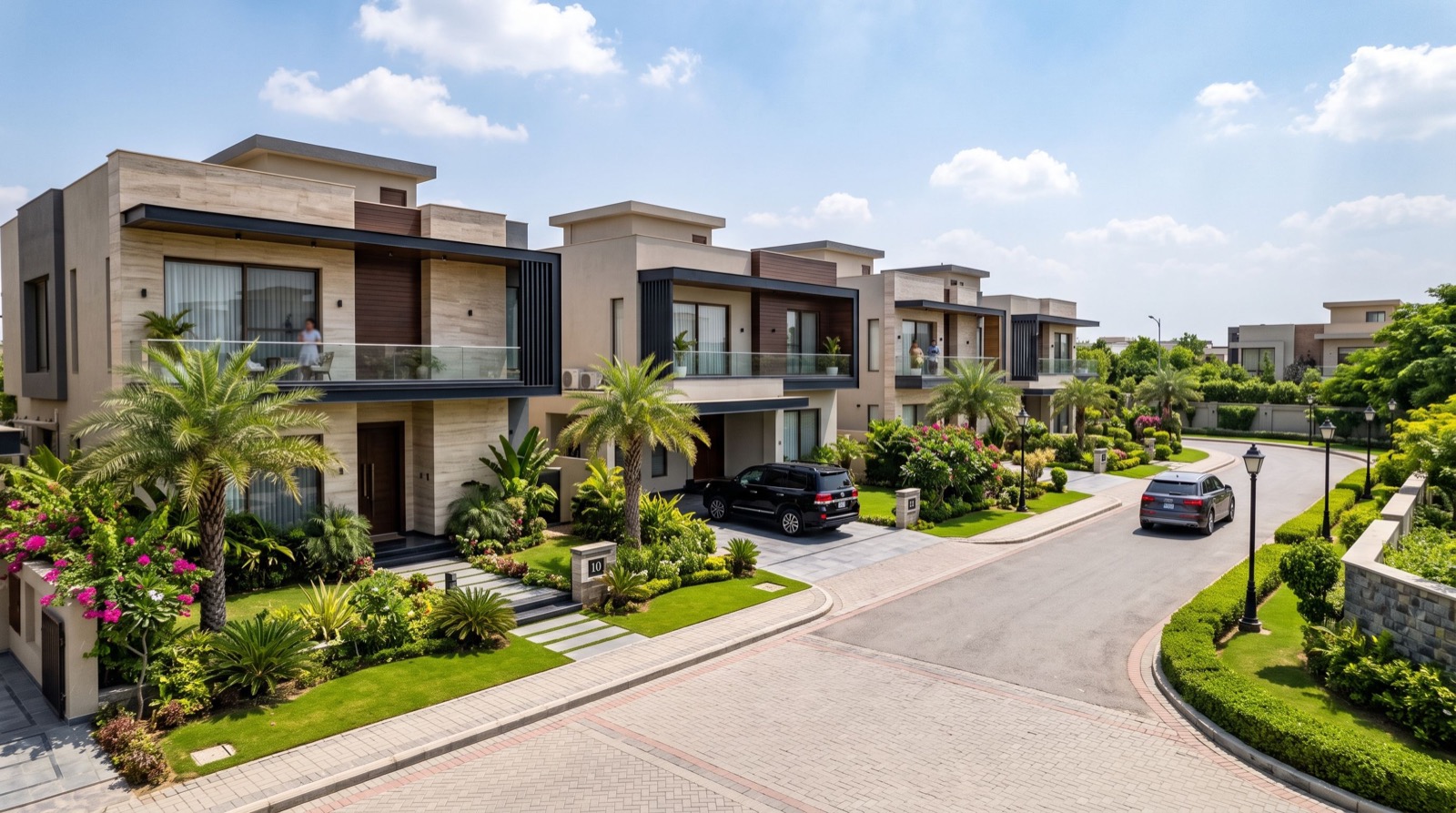
In property, the old advice still holds: location decides almost everything. You can renovate a kitchen, but you cannot move a society closer to your office or your child’s school. Before you commit to any housing scheme, study the Silver City location as carefully as the brochure’s artist impression.
This guide is a due-diligence checklist for buyers in Pakistan. It uses a housing society as the example and also explains how to evaluate the Silver City villas offered, from layout to resale potential. Use it as a framework, then confirm every detail on site and with official records.
Why Does Location Matter More Than the Price?
A lower price per marla looks attractive until you add daily travel time, poor roads or missing utilities. Over ten years, a long commute costs you hours every week, and a poorly connected area is harder to rent or resell.
Good locations tend to hold value because many buyers want them. Access, services and neighbourhood quality create a floor under prices even when the broader market cools.
The Five-Point Location Test
- Access: distance to main roads, motorways and public transport, and how traffic behaves at peak hours.
- Daily needs: schools, hospitals, markets and mosques within a reasonable travel time.
- Work and airport links: realistic travel times, not the optimistic minutes quoted by sales staff.
- Utilities and infrastructure: electricity, water, gas, sewerage and internet in place or firmly planned.
- Environment and growth: surrounding development, flood risk, noise and future roads.
How Do You Check Access in the Real World?
Do not rely on a map app alone. Visit at three times: a weekday morning peak, mid-afternoon and a weekend evening. Drive from the site to your workplace and to the nearest hospital at those hours and record the times in a notebook.
Look at the approach road. Is it paved and wide, or narrow and shared with heavy vehicles? Note where entry gates are and whether separate routes exist if one gets blocked. These small details separate a convenient society from a frustrating one.
Questions to ask on a site visit
- Which roads connect the society to the main highway?
- Is public or shuttle transport available?
- How far is the nearest hospital with an emergency unit?
- Where do children from the area attend school today?
- What is the status of electricity and water connections?
Paperwork Comes Before Payment
Legal clarity protects your investment. Ask for written proof of the following, and verify each with the relevant authority, never only with the seller.
- Approval of the housing scheme or its NOC from the relevant development authority.
- Ownership and land record of the plot or unit, checked through official land records.
- An allotment letter or sale agreement with clear terms and a payment schedule.
- Possession status and development progress in writing.
The Punjab Land Records Authority provides information on land records at plra.punjab.gov.pk, a useful source for verifying ownership details in the province. For any large purchase, consult an independent property lawyer before transferring money.
Plot, Villa or Apartment: Comparing Options
| Factor | Plot | Villa | Apartment |
|---|---|---|---|
| Upfront cost | Lower, but construction is extra | Higher, ready or semi-ready | Often lowest entry price |
| Control over design | Full | Limited to finishing | Minimal |
| Time to move in | Longest | Short if completed | Short if completed |
| Maintenance | Yours | Yours, plus society charges | Shared, plus service charges |
| Space and privacy | Highest | High | Lower |
| Resale appeal | Depends on area growth | Strong in family neighbourhoods | Strong for rentals |
What to Check When Buying a Villa
Villas bundle land, construction and lifestyle. That means more variables to inspect.
- Covered area and layout: measure rooms and check that natural light and ventilation work in each.
- Construction quality: inspect walls for cracks, damp patches and uneven finishing, and ask which materials were used.
- Services: confirm the power capacity, water storage, gas availability and drainage.
- Security and common areas: gates, guards, street lighting and park maintenance.
- Costs beyond the price: transfer fees, society charges, utilities connection and maintenance.
An original tip many experienced buyers use: visit the property after heavy rain. Drainage problems, leaks and flooded streets show up immediately, and no brochure will mention them.
Estimating Total Cost and Return
Add every expected cost before comparing options: purchase price, taxes and transfer charges, legal fees, utility connections, finishing and furniture. Compare that total with realistic rent in the area to estimate the yield. If the rent offers a weak return and you are not planning to live there, you are betting purely on price growth, which carries more risk.
A simple buying timeline
- Define budget, purpose and timeline.
- Shortlist three societies and visit each twice.
- Verify documents with the relevant authorities.
- Negotiate terms and obtain a written agreement.
- Pay through traceable banking channels and keep receipts.
- Take possession only after final inspection and transfer.
Working With Agents and Advisors
Good agents save time, but incentives differ from yours. Ask each one how they are paid, and request written details of every claim. Compare notes from several people, much like consulting an experienced local team before a major purchase: ask for references, check track record and keep communication in writing.
Frequently Asked Questions
How do I know a housing society is legally approved?
Ask for the approval or NOC and confirm it directly with the relevant development authority. Never rely only on photocopies shared by sellers.
Is a plot or a villa better for investment?
Plots often cost less upfront and suit long-term holders, while villas suit buyers who want to move in or rent out soon. Match the choice to your timeline and cash flow.
When is the best time to visit a society?
Visit at different hours and on a rainy day. You will see traffic, security and drainage under real conditions.
What documents should I keep after buying?
Keep the agreement, payment receipts, allotment or transfer papers, possession letter and utility connection records in one secure folder, with digital copies as backup.
Conclusion
Studying the Silver City location with a clear checklist protects you from costly surprises. Test access in real traffic, verify every document, compare plot, villa and apartment options honestly and calculate total costs. Do that before paying anything in 2026 and your decision rests on facts instead of promises.