Queue Management System for Restaurants: A 2026 Speed-of-Service Playbook
In the restaurant world, seconds are currency. A slow lane, a confused counter, or an invisible bottleneck can turn a loyal guest into a one-time visitor. That is why a smart queue management system has become the quiet engine behind the fastest, friendliest quick-service brands in 2026. It orchestrates how guests order, wait, and collect, so the kitchen hums and the line keeps moving.
This playbook takes a restaurant-first look at queuing technology: how it applies to counters, kiosks, and drive-thru lanes, what to measure, and how to pick tools that pay for themselves. If your goal is faster throughput without sacrificing accuracy or hospitality, read on.
Why speed-of-service defines restaurant profit
Quick-service and fast-casual restaurants live and die by throughput. Every car served per hour and every guest cleared from the counter directly shapes revenue during the narrow peak windows that make or break a day. A queue management system turns those chaotic rushes into a measurable, repeatable process.
The stakes are not trivial. Industry research consistently shows that guests abandon lines that look too long, and that order accuracy drops when staff feel rushed. The U.S. National Institute of Standards and Technology has long championed process measurement as the foundation of quality improvement — a principle that applies just as neatly to a burger lane as to a factory floor.
Where lines form in a typical outlet
- Front counter: Ordering and payment congestion during lunch peaks.
- Kiosk cluster: Self-order screens that back up without clear routing.
- Pickup shelf: Delivery riders and dine-in guests colliding.
- Drive-thru lane: The single biggest throughput lever for most brands.
How does a queue management system help a restaurant?
The core idea is simple: separate the act of ordering from the act of waiting, then measure every stage. Guests place an order at a kiosk, counter, or lane, receive a token or order number, and are called when the food is ready. Meanwhile, managers watch live timers that expose exactly where the delay sits.
- Capture the order quickly through kiosks, counters, or the drive-thru menu board.
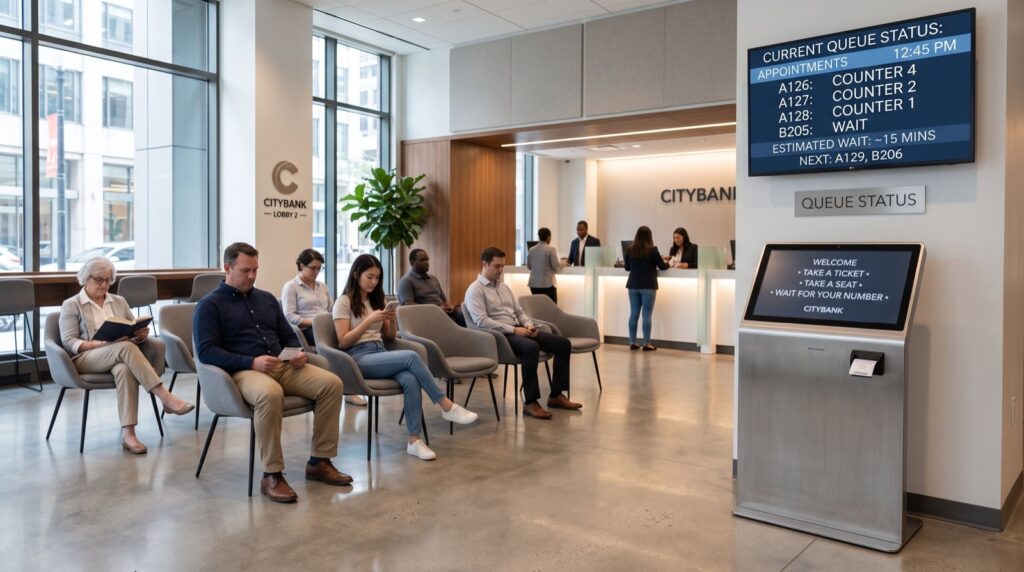
- Stage the wait with clear digital order-status screens instead of a crowded rail.
- Time each phase — greet, order, pay, prep, and hand-off — automatically.
- Alert on outliers so a stuck order triggers action before a guest complains.
For lanes specifically, purpose-built PAR Drive Thru solutions timing tools break the drive-thru into discrete stages, letting operators pinpoint whether the delay is at the speaker, the window, or the kitchen. That precision is what separates a 90-second lane from a three-minute one.
Digital signage keeps guests informed
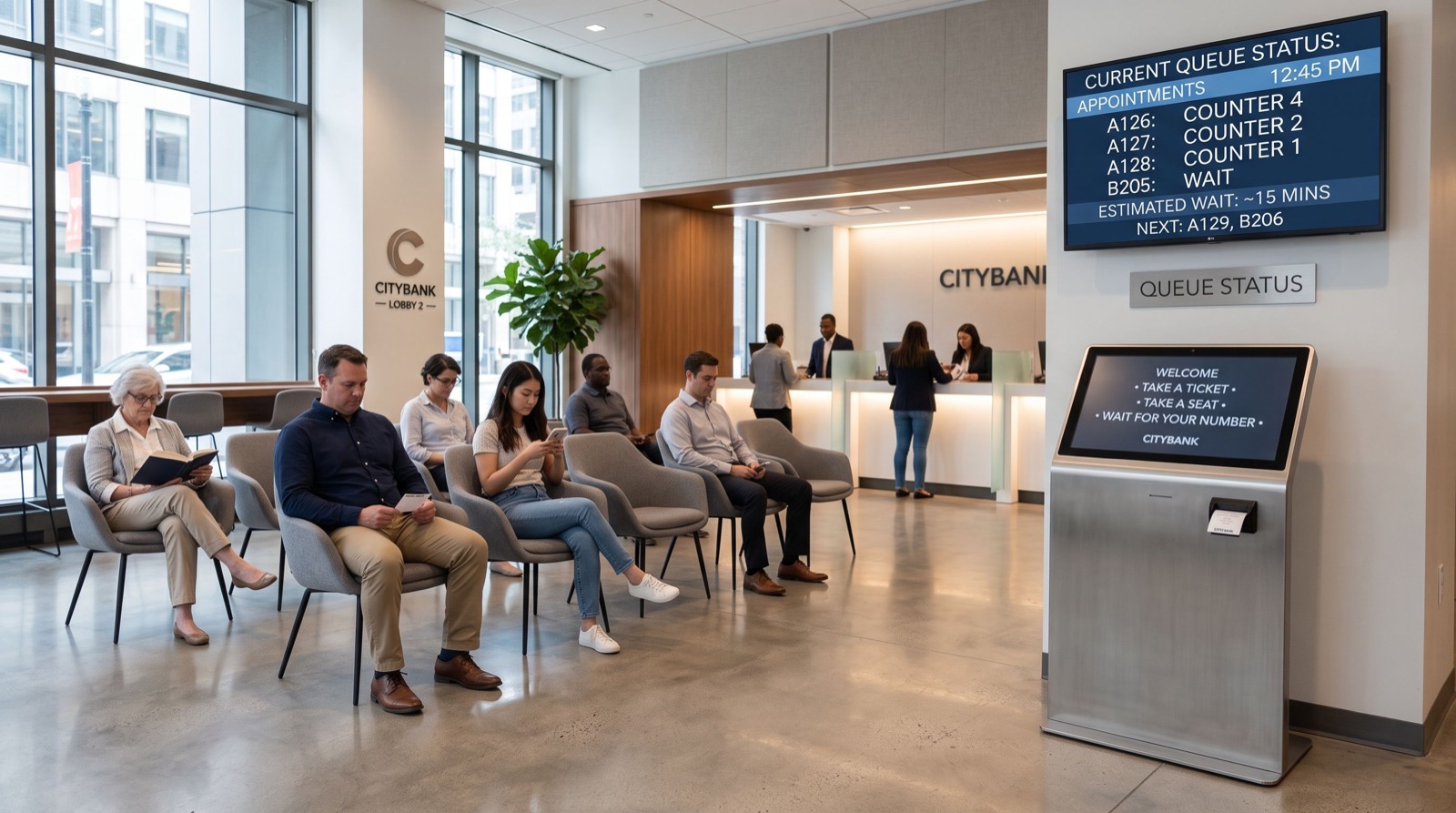
A visible order-status board does more than look modern — it lowers perceived wait time. When guests can see their number moving up the queue, they relax and complain less, even if the clock hasn’t changed. This psychological win is one of the cheapest experience upgrades a restaurant can make.
Counter, kiosk, or drive-thru: a quick comparison
Different formats need different queuing tactics. Use the table below to match the tool to the touchpoint.
| Touchpoint | Primary goal | Key metric | Best queuing tool |
|---|---|---|---|
| Front counter | Clear guests fast at peak | Service time per order | Token + status screen |
| Self-order kiosk | Boost average check | Orders per kiosk/hour | Automated routing to pickup |
| Drive-thru lane | Maximise cars per hour | Total lane time | Stage-by-stage lane timer |
What to measure after you go live
Data is only useful when it changes behaviour. Focus on a compact set of metrics that managers can act on during a shift, not a giant report nobody reads.
- Total lane time: The headline drive-thru number, from arrival to departure.
- Order accuracy: Track remakes and refunds tied to rushed periods.
- Abandonment: Guests who leave the line or drive off.
- Peak coverage: Whether staffing matches the busiest 15-minute blocks.
One practical tip from high-performing outlets: post the previous day’s average lane time where the crew can see it. A visible target creates friendly competition and keeps speed-of-service top of mind without a manager hovering.
Don’t forget the broader operation
Queuing sits inside a bigger picture of scheduling, layout, and even relocations when a brand expands or refits a site. When you open or move a location, coordinating fit-out and tech installation with reliable local experts keeps downtime short and prevents a rocky reopening that erases hard-won loyalty.
Regional context: rising expectations in the Gulf
Across the Gulf, dining out is a core part of daily life, and competition is fierce. Brands operating in fast-growing markets increasingly deploy a queue management system in saudi arabia and neighbouring countries to keep pace with guest expectations for speed and polish. Localised menus and Arabic-first interfaces are now table stakes, not extras.
The operators winning market share in 2026 treat queuing data as seriously as food cost. They review lane times daily, adjust staffing to the minute, and use the numbers to justify layout tweaks that shave precious seconds off every transaction.
Frequently Asked Questions
Will a queue management system slow down my kitchen?
No. A good system adds no steps for the crew; it simply times the steps you already perform and displays order status to guests. If anything, it speeds the kitchen by exposing where prep bottlenecks form.
How quickly can a restaurant see results?
Most outlets see measurable improvement in lane and counter times within the first two to four weeks, once staff adapt to the new status displays and managers begin acting on the live timers.
Is drive-thru timing worth it for a single location?
Yes. Even one lane benefits, because total lane time is the clearest predictor of cars served per hour. Stage-level timing tells you exactly where to intervene, which pays back quickly during peaks.
Can it integrate with my existing POS?
Leading platforms integrate with common point-of-sale systems, syncing order data so status screens and timers stay accurate without double entry.
Conclusion
A restaurant queue management system is the difference between a peak that feels controlled and one that feels like chaos. By separating ordering from waiting, timing every stage, and acting on live data, you serve more guests, keep accuracy high, and protect the hospitality that brings people back. Start by measuring your busiest lane and counter today, then let the numbers guide smart, incremental upgrades that compound into a faster, more profitable operation.