Best Solar Company in Pakistan for Businesses: A 2026 Commercial Guide
For factories, shops, and offices, partnering with the best solar company in Pakistan is now a competitive necessity rather than a luxury. In 2026, energy is one of the largest controllable costs on a commercial balance sheet, and solar directly attacks that cost while shielding operations from load shedding. This guide focuses on what businesses need to know before they invest.
Commercial solar differs from residential in scale, complexity, and payback logic. A business burns most of its power during daylight hours, which is exactly when panels produce the most. That alignment makes rooftop and ground-mounted solar unusually well suited to industrial and retail loads.
Why Commercial Solar Pays Off Faster
Businesses often see quicker returns than homes because their consumption profile matches solar generation almost perfectly. Machines, cooling, lighting, and computers all run while the sun is up, so a high share of generation is used on site.
Self-consumed units are the most valuable units because they replace power you would otherwise buy at commercial tariffs. The more you use directly, the faster the system pays for itself.
Reliability adds a second layer of value. When the grid fails, an unprotected business stops earning. A properly designed solar-plus-storage system keeps critical operations running, protecting revenue that a simple bill calculation never captures.
What Does Downtime Really Cost?
Managers often underestimate the price of interruptions. A stalled production line, spoiled inventory, or idle staff can dwarf the electricity bill itself.
- Lost production during unplanned outages.
- Wages paid to staff who cannot work.
- Damaged or spoiled temperature-sensitive stock.
- Missed deadlines and unhappy customers.
When you weigh solar against these hidden costs, the investment case grows far stronger than a headline payback figure suggests.
Choosing the Best Solar Company in Pakistan for Your Business
Commercial projects demand engineering depth, not just panel supply. You need a partner who can perform a proper load study, design for your site conditions, and support the system for years.
Look for a Best solar company in pakistan that has completed commercial installations of a similar size to yours. Ask for case studies, generation data, and references from other businesses in your sector.
Regional expertise matters too. An industrial hub has its own grid patterns and space constraints, so a team experienced in solar installation in Sialkot will understand local manufacturing loads, rooftop types, and distribution-company procedures better than a distant vendor.
Key Criteria for a Commercial Partner
- Engineering capacity: In-house design and load analysis, not just resale.
- Bankable components: Tier-1 panels and reputable commercial inverters.
- Structural assessment: Proper roof-loading and mounting design.
- Monitoring: Live performance dashboards for accountability.
- Service level: A clear maintenance contract with response times.
Choose trusted professionals who treat your installation as a long-term partnership and back it with a genuine service agreement.
Sizing Options for Commercial Sites
Commercial systems span a wide range. The table below outlines common tiers and where they fit, though a load study always refines the final design.
| System Size | Typical Site | Primary Benefit |
|---|---|---|
| 25 kW | Retail store, clinic | Daytime bill reduction |
| 50 kW | Small factory, office block | Major cost savings |
| 100 kW | Mid-size manufacturer | Savings plus partial backup |
| 250 kW+ | Large industrial unit | Strategic energy independence |
Larger systems unlock a lower cost per unit, but the correct size depends on your consumption, roof or land area, and net-metering or wheeling arrangements.
Financing and the 2026 Outlook
Businesses can fund solar outright, through leasing, or via energy-as-a-service models where a provider owns the system and sells the power. Each option shifts capital expenditure and risk differently, so match the structure to your cash-flow priorities.
The global trend is firmly in solar’s favour. The International Energy Agency projects that renewables will supply an ever-larger share of new electricity capacity through the coming years, and falling hardware costs make commercial systems increasingly attractive in 2026.
Regulatory support reinforces the case. Net-metering rules overseen by the National Electric Power Regulatory Authority let eligible businesses offset consumption with exported generation, improving returns on grid-tied commercial systems.
Rooftop or Ground-Mount: Which Fits Your Site?
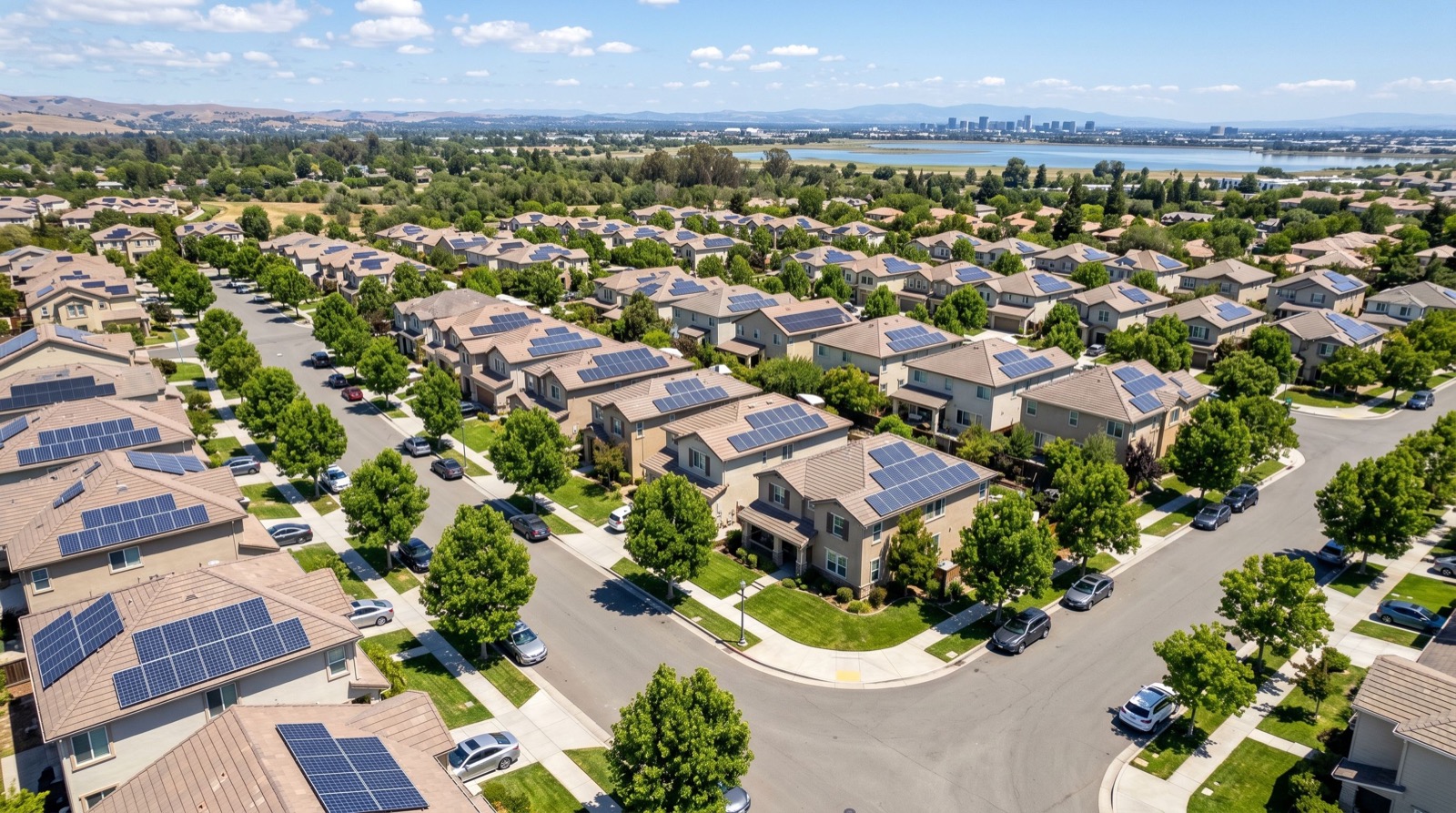
Most commercial buyers default to rooftop solar, and for good reason. Rooftops are unused space, so panels there generate income from an asset that otherwise sits idle. Rooftop arrays also sit close to the load, which reduces cable runs and losses.
Ground-mount systems make sense when you own spare land or your roof cannot bear extra weight. They allow perfect tilt and orientation, simplify maintenance access, and scale easily for very large capacities. The trade-off is the cost of land use and civil works.
A thorough site assessment weighs roof age, structural capacity, shading, and future expansion plans before recommending either path. Skipping this step is how businesses end up with underperforming systems, so insist on a proper survey.
A Simple Worked Example
Consider a mid-size unit that consumes most of its power between nine in the morning and six in the evening. A 100 kW rooftop system could offset a large share of that daytime draw, turning a heavy monthly bill into a modest one.
Because the business consumes nearly all it generates on site, the savings accrue at the commercial tariff rate rather than the lower export rate. Over a typical three-to-five-year payback, the system transitions from an expense into a source of ongoing profit that continues for another two decades.
Maintenance for Uninterrupted Operations
Commercial systems justify a formal maintenance plan because uptime directly protects revenue. Preventive care keeps output high and catches faults before they cause losses.
- Scheduled panel cleaning suited to your local dust and pollution levels.
- Thermal inspection of connections and combiner boxes.
- Inverter firmware updates and performance checks.
- Remote monitoring with alerts for sudden output drops.
A maintenance contract with defined response times turns your solar asset into a dependable part of daily operations rather than a set-and-forget purchase.
Frequently Asked Questions
How long is payback for a commercial solar system?
Most well-designed commercial systems pay back within three to five years, thanks to high daytime self-consumption. Sites with heavy daytime loads often see the fastest returns.
Can solar fully protect my business from load shedding?
A hybrid system with batteries can keep critical operations running during outages. Full protection depends on battery sizing, so prioritise the loads that matter most to your business.
Do I need to shut down during installation?
Usually not for long. Experienced installers phase the work and schedule grid tie-in during low-activity windows to minimise disruption to your operations.
What size system does my business need?
It depends on your consumption, available space, and goals. A professional load study translates your bills and usage patterns into a precise, cost-effective system size.
Conclusion
For 2026, commercial solar is a proven way to slash energy costs, hedge against rising tariffs, and defend operations against load shedding. The best solar company in Pakistan will bring engineering rigour, bankable components, and long-term service to make your investment perform.
Ready to cut your energy bill and protect uptime? Book a commercial load study today and receive a tailored proposal built around your site and business goals.