There is a moment in every cold chain journey that defines whether a business succeeds or fails — the moment a temperature-sensitive product transitions from production into storage. Get that moment right, maintain the conditions that follow it consistently, and the product arrives at its destination with its quality, efficacy, and commercial value fully intact. Get it wrong — even once, even briefly — and the consequences can cascade across an entire supply chain, damaging inventory, violating regulations, and eroding the customer trust that took years to build. Units has engineered its chilled storage infrastructure around this single defining moment — ensuring that from the instant your product enters their care, it never faces a compromised environment, an unmonitored condition, or an unmanaged risk.
Chilled Storage
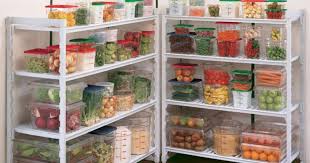
Chilled storage occupies the most precise and demanding segment of the temperature-controlled storage spectrum. Operating within a narrow band typically between 0°C and 8°C, chilled storage must maintain absolute thermal consistency for products whose safety, efficacy, or commercial quality can be undermined by deviations measured in single degrees and sustained for mere hours.
This precision requirement makes chilled storage fundamentally different from any other warehousing category. It is not simply cold warehousing — it is a continuous, technology-driven process of environmental management, risk mitigation, and regulatory compliance that demands investment, expertise, and operational discipline at every level of the organization delivering it.
What genuinely professional chilled storage looks like — and why Units sets the standard:
Thermal Architecture That Never Compromises Units builds its chilled storage facilities from the inside out — beginning with insulation systems engineered for Saudi Arabia’s extreme external temperature differentials, vapor barrier construction that prevents moisture infiltration at every structural joint, and anti-condensation door systems that minimize thermal exchange during the frequent product movements that high-volume operations demand. The result is a thermal envelope that maintains target temperatures with remarkable efficiency regardless of how many times doors open or how extreme Saudi summer conditions become.
Technology That Monitors Everything, Misses Nothing Every chilled zone within Units’ facilities is embedded with IoT-connected temperature and humidity sensors that transmit continuous readings to cloud-based monitoring platforms. These platforms apply threshold algorithms that distinguish between normal fluctuations and genuine excursions — sending immediate automated alerts to operational teams when conditions require intervention. This technology does not simply record what happened; it enables response before consequences occur.
Regulatory Compliance Built Into Operations Units does not treat regulatory compliance as a periodic audit exercise — it is embedded into daily operational procedures. Saudi Food and Drug Authority (SFDA) requirements, HACCP food safety management protocols, and Good Distribution Practice (GDP) guidelines for pharmaceutical products are integrated into every standard operating procedure, staff training program, and documentation system across all chilled facilities.
Biological and Pharmaceutical Grade Capability Beyond conventional food and dairy chilled storage, Units maintains dedicated pharmaceutical-grade chilled zones with enhanced precision management, restricted access protocols, and comprehensive temperature audit trail documentation satisfying the most stringent healthcare supply chain compliance requirements.
Industries that depend on Units’ chilled storage infrastructure:
- 💊 Pharmaceutical distributors — maintaining medicine and vaccine efficacy throughout the distribution chain
- 🥛 Dairy and fresh food producers — preserving freshness from production through retail delivery
- 🥦 Fresh produce importers — extending natural shelf life through consistent cold chain management
- 🌺 Floriculture and horticulture businesses — protecting the freshness that determines commercial value
- 🧬 Biomedical and research organizations — managing biological specimens and reagents under verified conditions
- 🍱 Premium food service and catering — ensuring ingredient quality for high-standard hospitality operations
Visit units.sa to explore Units’ complete chilled storage capabilities.
Chilled Storage in Riyadh
Riyadh is Saudi Arabia’s beating heart — the seat of government, the headquarters of the Kingdom’s largest corporations, the home of its most significant healthcare institutions, and the commercial center serving the largest urban population in the country. As the capital continues its extraordinary expansion under Vision 2030, the demand for world-class Chilled Storage in Riyadh has become one of the most pressing infrastructure requirements in the city’s rapidly growing supply chain ecosystem.
The Riyadh cold chain challenge is shaped by factors unique to the capital’s environment and commercial character. Summer temperatures that regularly exceed 47°C create the most demanding external thermal conditions of any major Saudi city. The concentration of pharmaceutical headquarters, major hospital networks, and healthcare distributors in Riyadh creates exceptionally rigorous cold chain compliance requirements. And the city’s position as the distribution hub for the entire central region means that Riyadh chilled storage operations must function at high throughput while maintaining the precision that sensitive products demand.
Units has developed its Riyadh chilled storage operations as a direct, engineered response to these specific challenges:
- 🏙️ Capital city strategic positioning — Units’ Riyadh facilities are located to serve the city’s key commercial, healthcare, and distribution corridors with minimum transport exposure for chilled cargo
- 🌡️ Desert climate thermal management — enhanced insulation specifications and advanced cooling system redundancy designed specifically for Riyadh’s extreme temperature differentials between external summer heat and internal chilled storage requirements
- 🏥 Healthcare sector specialization — dedicated chilled storage zones configured for Riyadh’s substantial pharmaceutical and medical distribution sector, with GDP-compliant procedures and documentation meeting the highest international healthcare logistics standards
- 📊 High-volume throughput capability — Riyadh’s role as a national distribution hub demands chilled storage operations capable of processing significant inbound and outbound product volumes without any compromise to temperature control precision during peak activity periods
- 🔬 Chain of custody documentation — complete, unbroken temperature and handling records for every product throughout its storage duration, providing the audit trail that Riyadh’s regulatory-intensive healthcare and food sectors demand
- ☁️ Remote visibility for Riyadh clients — digital monitoring dashboards enabling businesses headquartered in Riyadh to maintain real-time oversight of their stored inventory conditions, stock levels, and movement history from any device at any time
- ⚡ Riyadh-grade power resilience — generator infrastructure and UPS systems ensuring that power grid events common in high-demand urban environments never translate into temperature excursions affecting stored products
From multinational pharmaceutical companies establishing their Saudi distribution operations to premium food importers serving Riyadh’s sophisticated consumer market, Units has become the chilled storage partner of choice for the capital’s most demanding businesses.
Chilled Storage in Saudi Arabia
Across the full breadth of the Kingdom, Chilled Storage in Saudi Arabia has evolved from a niche logistics service into a fundamental infrastructure requirement driving competitiveness across multiple sectors. Saudi Arabia’s ambitious economic diversification under Vision 2030 is generating unprecedented demand for cold chain infrastructure that matches international standards in every dimension — precision, compliance, technology, and scale.
Units serves this national demand through a strategically distributed network of chilled storage facilities positioned across Saudi Arabia’s key commercial cities — delivering consistent, high-quality cold chain management that gives businesses the confidence to scale across the Kingdom without cold chain performance ever becoming a limiting factor.
The breadth of Saudi Arabia’s chilled storage requirements — and Units’ capability to serve them:
The Healthcare Imperative Saudi Arabia’s rapidly expanding healthcare sector, driven by population growth, Vision 2030 healthcare investment, and the pharmaceutical manufacturing ambitions outlined in the National Industrial Development Program, creates enormous demand for pharmaceutical-grade chilled storage that meets both Saudi regulatory requirements and international GDP standards. Units maintains certified pharmaceutical cold storage capability across its national network, serving distributors of vaccines, biologics, temperature-sensitive medications, and medical devices throughout the Kingdom.
The Food Security Mission Saudi Arabia imports a significant proportion of its food supply — much of it temperature-sensitive — and the Kingdom’s food security agenda places enormous emphasis on the cold chain infrastructure that protects this supply from origin through to consumer. Units plays a direct role in Saudi Arabia’s food security mission by providing the chilled storage backbone that keeps fresh dairy, produce, and specialty food products available, safe, and high-quality across the national retail and food service network.
The Retail Expansion Wave Saudi Arabia’s retail sector is experiencing exceptional growth, driven by rising disposable incomes, changing consumer preferences, and major retail development projects transforming the Kingdom’s cities. Every new supermarket, hypermarket, and specialty food retailer that opens requires a reliable chilled supply chain — and Units provides the upstream cold storage infrastructure that makes that reliability possible.
Nationwide Service Consistency What distinguishes Units from regional cold storage providers is the consistency of standards across all locations. A pharmaceutical distributor managing chilled inventory across Riyadh, Jeddah, and Dammam simultaneously receives the same documentation standards, the same monitoring technology, and the same compliance framework at every Units facility — simplifying multi-city operations and providing the uniform quality guarantee that national supply chain managers require.
Why Units is Saudi Arabia’s Most Trusted Chilled Storage Company
Units has earned its leadership position in Saudi Arabia’s chilled storage market through a philosophy that sets it apart from every competitor: genuine investment in understanding the unique requirements of each industry it serves, combined with the infrastructure and expertise to meet those requirements without compromise.
The foundations of their market leadership:
- ✅ Purpose-engineered facilities designed specifically for Saudi Arabia’s climate, regulatory environment, and cold chain complexity
- ✅ Technology-first operations with IoT monitoring, cloud platforms, and client digital portals delivering transparency and accountability at every stage
- ✅ Cross-sector expertise spanning pharmaceutical, food, dairy, fresh produce, floriculture, and biomedical industries
- ✅ National coverage with strategically positioned facilities serving Riyadh, Jeddah, Dammam, and Saudi Arabia’s key logistics corridors
- ✅ Regulatory mastery with SFDA, HACCP, and GDP compliance embedded into every operational procedure across the entire network
Conclusion
In the cold chain, there is no acceptable margin for error — and no acceptable substitute for genuine expertise. Whether your business requires precision Chilled Storage infrastructure, specialized cold chain management in Riyadh serving the capital’s demanding healthcare and retail markets, or a nationally consistent Chilled Storage in Saudi Arabia solution that scales with your growth ambitions under Vision 2030, Units delivers the engineering precision, regulatory compliance, and operational reliability that your most valuable products deserve. Your cold chain is only as strong as its weakest link — make Units your strongest one. Visit units.sa today and protect what matters most.
Frequently Asked Questions (FAQs)
Q1. What specific temperature range does Units maintain in its chilled storage facilities, and how is consistency guaranteed? Units maintains chilled storage temperatures within the 0°C to 8°C range across all its facilities, with zone-specific parameters adjusted for different product categories where required. Consistency is guaranteed through a multi-layered approach combining purpose-engineered thermal architecture — including advanced insulation and vapor barrier construction — with IoT-connected sensor networks that monitor conditions continuously, redundant cooling systems that maintain performance through any single equipment event, and automated alerting protocols that trigger operational response before any temperature deviation affects stored products.
Q2. How does Units’ chilled storage in Riyadh address the city’s extreme summer temperatures? Units’ Riyadh chilled storage facilities are engineered with enhanced insulation specifications and cooling system redundancy designed specifically for the city’s extreme summer conditions, where external temperatures regularly exceed 47°C. The thermal engineering approach ensures that internal chilled storage conditions remain precisely controlled regardless of external heat pressure. Additionally, Units operates N+1 redundant cooling infrastructure in Riyadh facilities, ensuring that any primary system irregularity during peak summer periods triggers immediate automatic backup activation without any temperature excursion reaching stored products.
Q3. Does Units provide pharmaceutical GDP-compliant chilled storage across Saudi Arabia? Yes, Units maintains pharmaceutical-grade chilled storage zones at its facilities across Saudi Arabia that comply fully with Good Distribution Practice (GDP) guidelines applicable to medicines, vaccines, biologics, and pharmaceutical raw materials. These zones feature enhanced temperature precision management, complete audit-trail documentation, restricted access protocols, and regular third-party compliance audits. Units also maintains full SFDA compliance documentation across all pharmaceutical cold storage operations, ensuring clients can demonstrate regulatory compliance to Saudi health authorities at any time.
Q4. Can Units manage chilled storage requirements for businesses operating across multiple Saudi cities simultaneously? Absolutely. Units’ national facility network enables businesses with multi-city operations to consolidate their chilled storage requirements under a single provider delivering consistent standards, unified documentation systems, and centralized client visibility across all locations simultaneously. This national consistency is particularly valuable for pharmaceutical distributors, food importers, and retail supply chain operators managing inventory across Riyadh, Jeddah, Dammam, and other Saudi cities — eliminating the management complexity and compliance inconsistency that comes with using different local providers in each city.
Q5. What is the process for a business to begin using Units’ chilled storage services in Riyadh or across Saudi Arabia? Businesses begin by visiting units.sa to connect with Units’ logistics consultancy team. An initial consultation establishes the full scope of requirements — product categories, temperature specifications, volume parameters, pharmaceutical or food compliance obligations, distribution geography, and seasonal demand patterns. Units then develops a customized chilled storage proposal covering facility allocation, operational procedures, compliance documentation framework, client monitoring access, and commercial terms. The onboarding process manages the practical transition of products into Units’ chilled storage operations with full cold chain continuity maintained throughout, ensuring no temperature excursion occurs during the changeover from existing storage arrangements.